

Accordion Chair of the Saratov State Conservatory – 70 Years – Russia
May 21st 2026
Dr Herbert Scheibenreif Manager of Friedrich Lips Productions
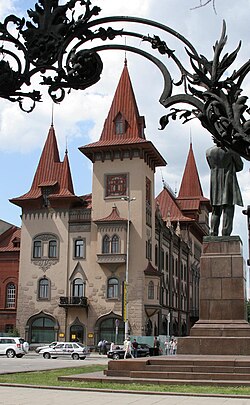
In 1912 the Saratov State Conservatory was the first provincial conservatory to be founded in Russia, after St Petersburg Conservatory and Moscow Conservatory. Saratov was, at the time, Russia’s third city. In 1935 the Conservatory was named after the tenor Leonid Sobinov.
To mark its 70th anniversary, the L. V. Sobinov Chair of Bayan at the Saratov State Conservatory was hosting the International Scientific and Practical Conference “Performing Arts and Pedagogy: History, Theory, Practice”.
The conference included presentations by renowned researchers, educators, concert artists, leading experts in the field of performing arts and music pedagogy, master classes, workshops, and a round table.
A wide range of issues in the following area was to be discussed:
- The performing and pedagogical heritage of Russian musicians.
- Theoretical, methodological and practical problems of musical interpretation.
- New ideas, programs and technologies in the music education system.
- Music pedagogy in schools and universities: creative schools, methods, traditions.
- Continuity and innovation in education.
- Current issues of performance and teaching methods of playing the accordion, bayan and plucked stringed instruments.
- Problems of folklore theory and performance practice.
Speakers included among others: Alexander Lebedev, Aleksey Dedyurin, Vyacheslav Bondarenko, Valery Yakovlev, Svetlana Smolyar (Russia), Lu Xiaoling, Congyu Wang, Sam Su, Zhao Ming, Guo Yingtong (China) and Herbert Scheibenreif (Austria).
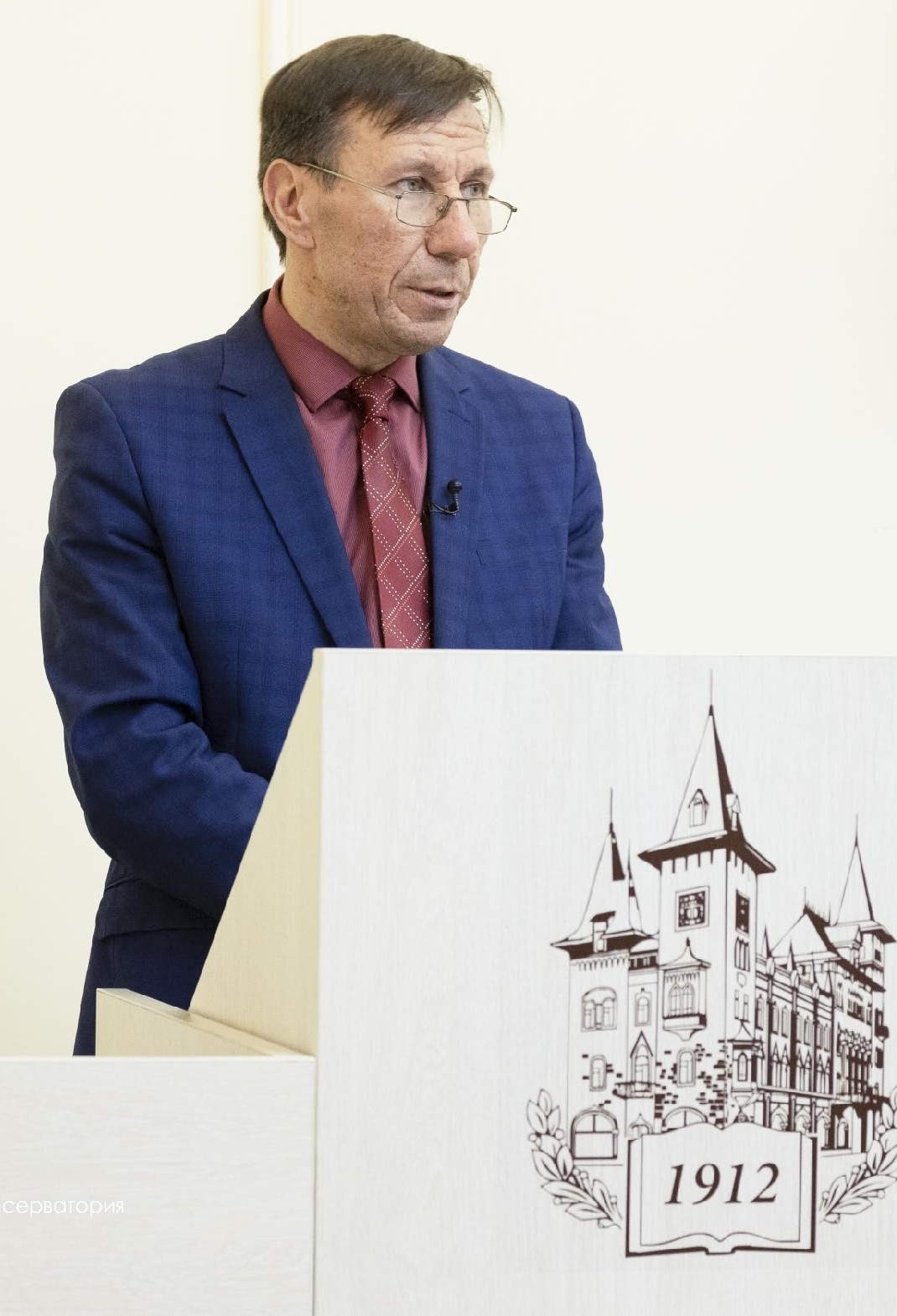
Finally Alexander Lebedev, main organizer of the conference, presented his book “The Genre of the Bayan Concerto in Russian Music”.
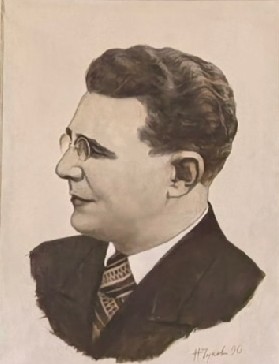
When speaking about Saratov, one must not forget famous bayan player, teacher and composer, Honored Artist of the RSFSR Ivan Yakovlevich Panitsky, whose 120th anniversary will be celebrated in 2027.
It was Panitsky, a blind natural genius, musician from the Volga village of Balakovo, who was to open the way for the Russian bayan to the academic stage, to substantially enrich the concert repertoire of professional bayan players.
His adaptation and variations on the themes of Russian folk songs, settings of works of musical classics for bayan, as well as original compositions formed the artistic layer of the national culture.


