

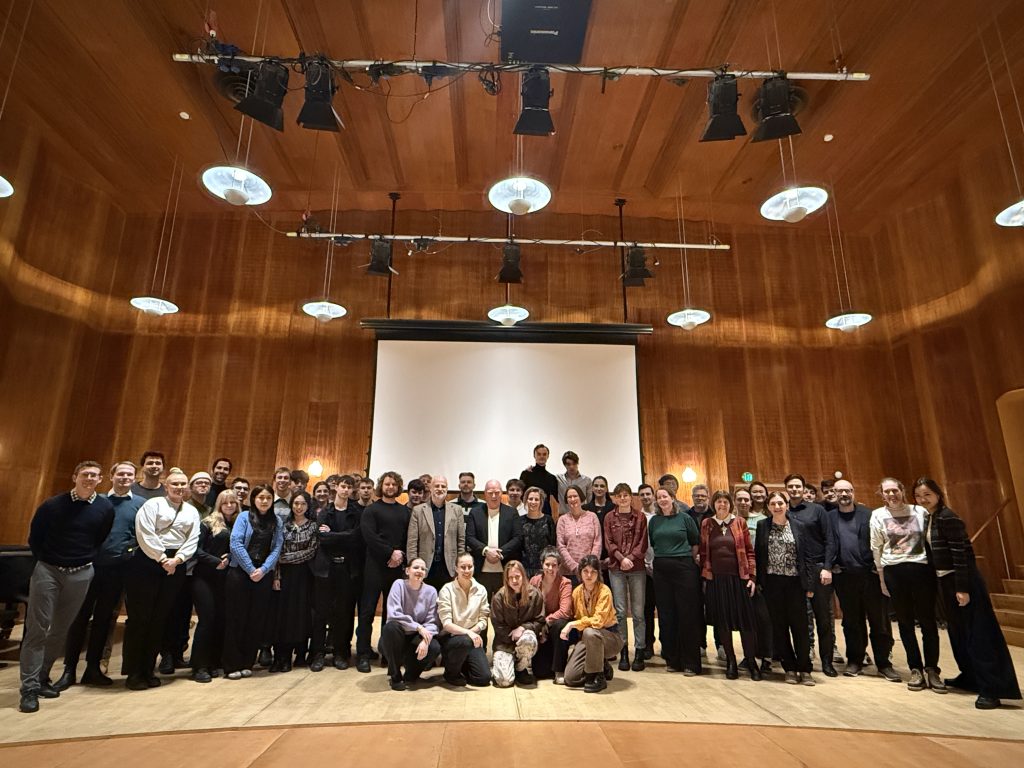
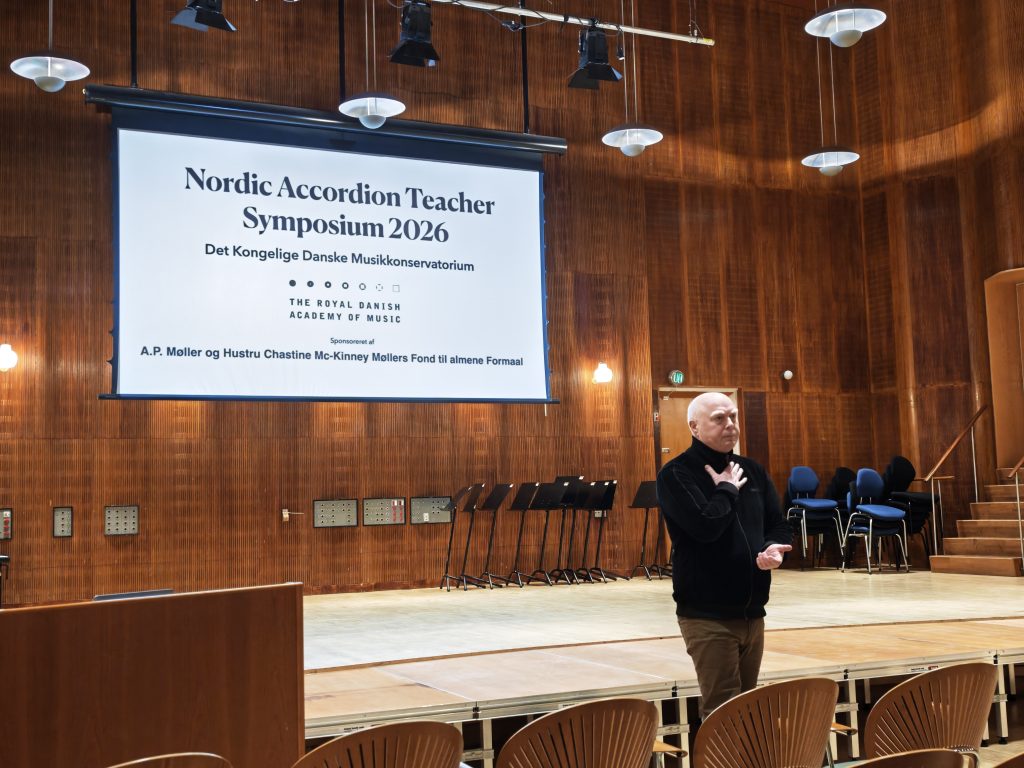
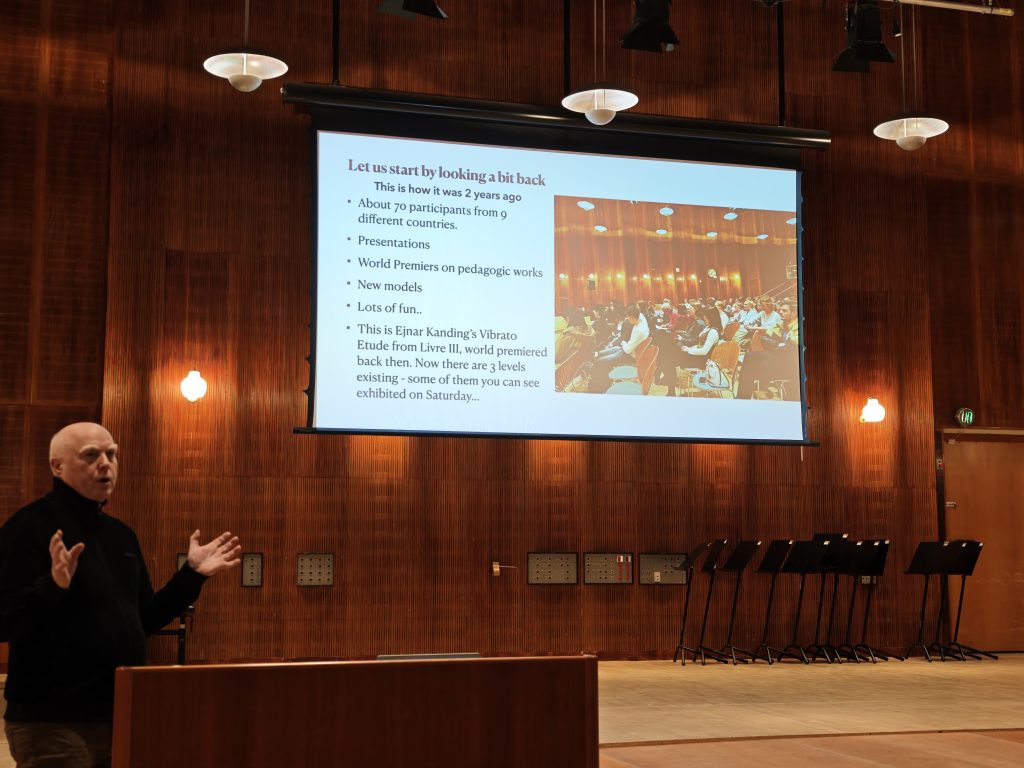
From 25 February to 1 March 2026, leading performers, researchers, and educators gathered for the second Nordic Accordion Teachers Symposium, an initiative founded in 2024 by Prof. Geir Draugsvoll, head of the accordion department at the Royal Danish Academy of Music, Copenhagen.
The Symposium has developed into an important meeting point for the global accordion community. Previous editions have welcomed speakers from Denmark, Holland, Finland, and New Zealand, with presentations representing countries including Sweden, Norway, Finland, Iceland, Lithuania, Estonia, China, and the Netherlands. Students and teachers from institutions such as the Royal Danish Academy of Music, the Norwegian Academy of Music, Sibelius, Lithuanian Academy of Music and Theatre, Estonian Academy of Music and Theatre, and other European conservatories regularly participate.
The symposium continues to serve as a vital platform for academic exchange across the Nordic and Baltic regions while maintaining a strong international outlook. The 2026 edition placed particular emphasis on two themes: innovative doctoral research emerging from Norwegian Academy of Music (Norges Musikkhøyskole – NMH) and the growing discussion around women in the accordion world.
During the five days of the symposium, there were lectures, presentations, workshops, and performances, with presenters, teachers and students exploring both artistic experimentation and the evolving social landscape of the instrument.
The symposium opened on Wednesday evening with a welcome and brief introduction to the upcoming days and Thusday began with a series of presentations exploring the accordion’s expanding technical and artistic possibilities.
Thusday 26th February – Expanding the Instrument: Doctoral Research and New Perspectives
Swedish accordionist and composer Kalle Moberg presented “Extended Expectations,” an exploration of the instrument’s organic potential. His research examined novel instrumental techniques and the fascinating world of non-linear free-reed phenomena, offering new insights into the accordion’s acoustic behaviour and expressive possibilities.
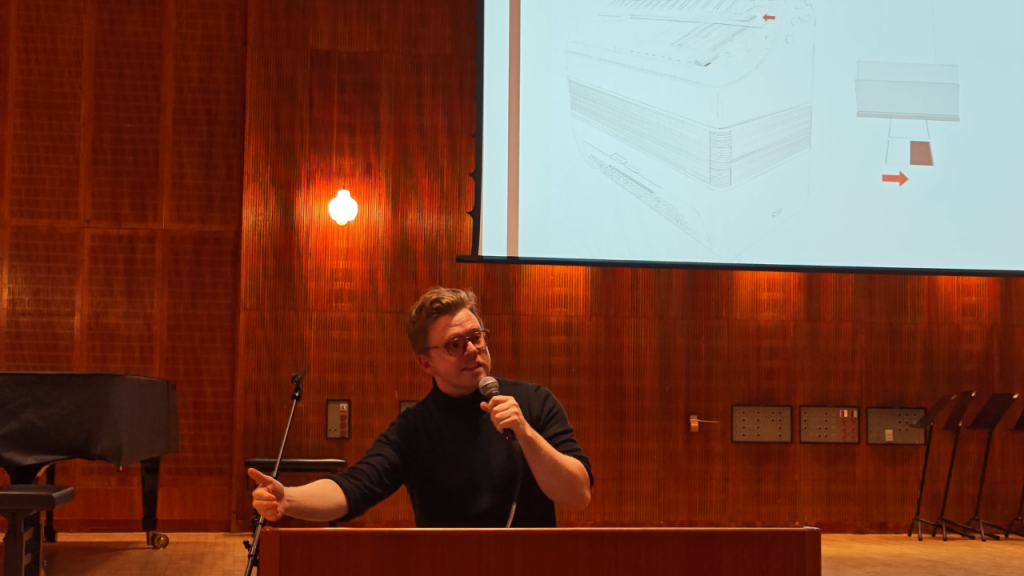
From Denmark, Frode Andersen, chairman of the Danish Accordion Teachers Society, introduced “Det lange træk” (The Long Pull). This ambitious national initiative aims to revitalise accordion culture in Denmark through a broad programme of activities designed to inspire students, teachers, and audiences while strengthening the country’s accordion community.
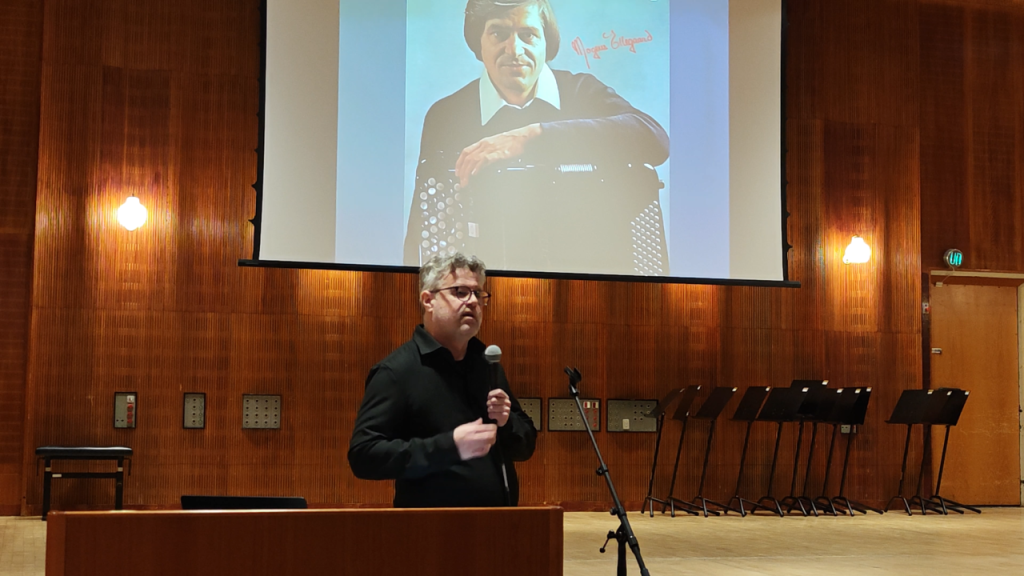
Another highlight was the presentation by Danish accordionist and researcher Andreas Borregaard. His artistic research project “JUST DO IT! Exploring the Musician’s (Use Of) Bodily Performance” investigates the increasing role of voice and physical movement in contemporary music performance. As composers incorporate theatrical and bodily elements into their works, Borregaard’s research seeks to define the skills and knowledge performers require to engage with this expanded musical language.

Evening Concert – Studio Hall
Thursday concluded with a concert of Royal Danish Academy of Music students, all who were current of past champions of the PIF Castelfidardo International Accordion Competitions.
Luca Bello:
Passing I-III – Martin Lohse
Catalin Gusevatii:
Tears – Bent Lorentzen
Suggestion Diabolique – Sergei Prokofiev
Leo Florin:
Allegro Assai – Johan Heinrich Roman
Vallflickans Dans – Hugo Alfvén
Metamorphoses – Torbjörn Lundquist
Gemini Duo:
Mars, Venus & Jupiter (from The Planets) – Gustav Holst
Friday 27th February – Women in the Accordion
A central theme of the symposium was the experience and visibility of women in the accordion field.
Bosnian accordionist and scholar Belma Šarančić presented “Balkan Challenges,” examining the cultural barriers often faced by female accordionists in the Balkans. In many traditional contexts the accordion has historically been perceived as a “man’s instrument,” creating significant obstacles for women pursuing professional careers. Her lecture highlighted both historical figures and contemporary initiatives working to shift these perceptions and improve opportunities for female performers.

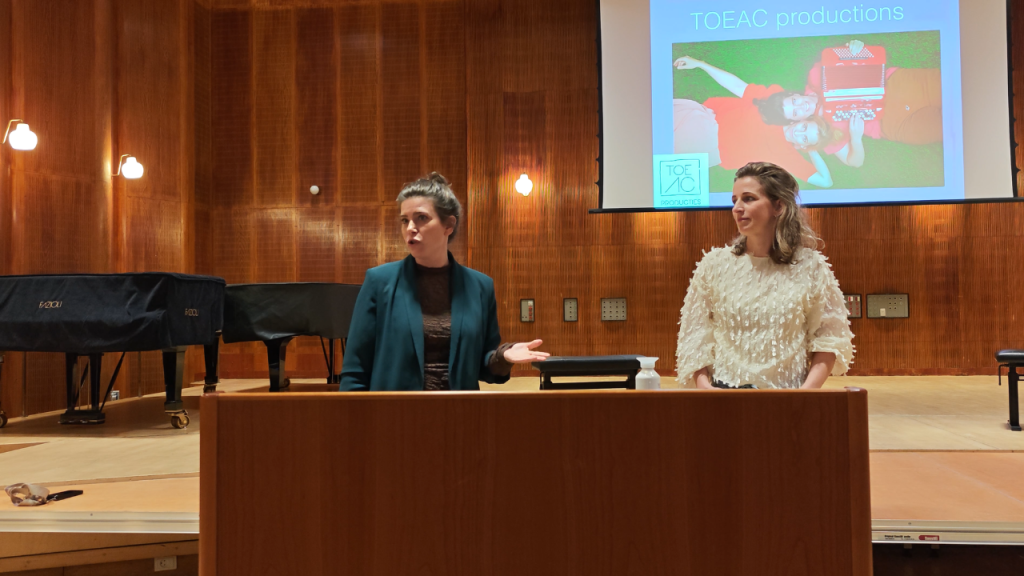
The Dutch ensemble TOEAC contributed their perspective through “Innovative Thinking,” focusing on musical entrepreneurship for the modern classical accordionist. Their presentation explored the perspective of female artists navigating today’s professional landscape and outlined the steps involved in developing a project from an initial idea into a fully realised stage performance.
Instrument innovation was also represented in the presentation “Pneumatic Hearts” by Axel Camilla Baratt-Due. This artistic research project explored experimental instrument building through accordions that had been deconstructed and rebuilt into new mechanical systems, incorporating coding and DIY electronics. The result is a fascinating intersection between craftsmanship, technology, and musical expression.

Saturday 28th February – Inspiring the Next Generation
Saturday’s Accordion Day shifted the focus toward education and outreach. Activities were designed specifically for young participants, with academy students joining children in interactive music sessions across several rooms tailored to different age groups. The day opened with a lively Welcome Dance featuring music from In the Hall of the Mountain King by Edvard Grieg.
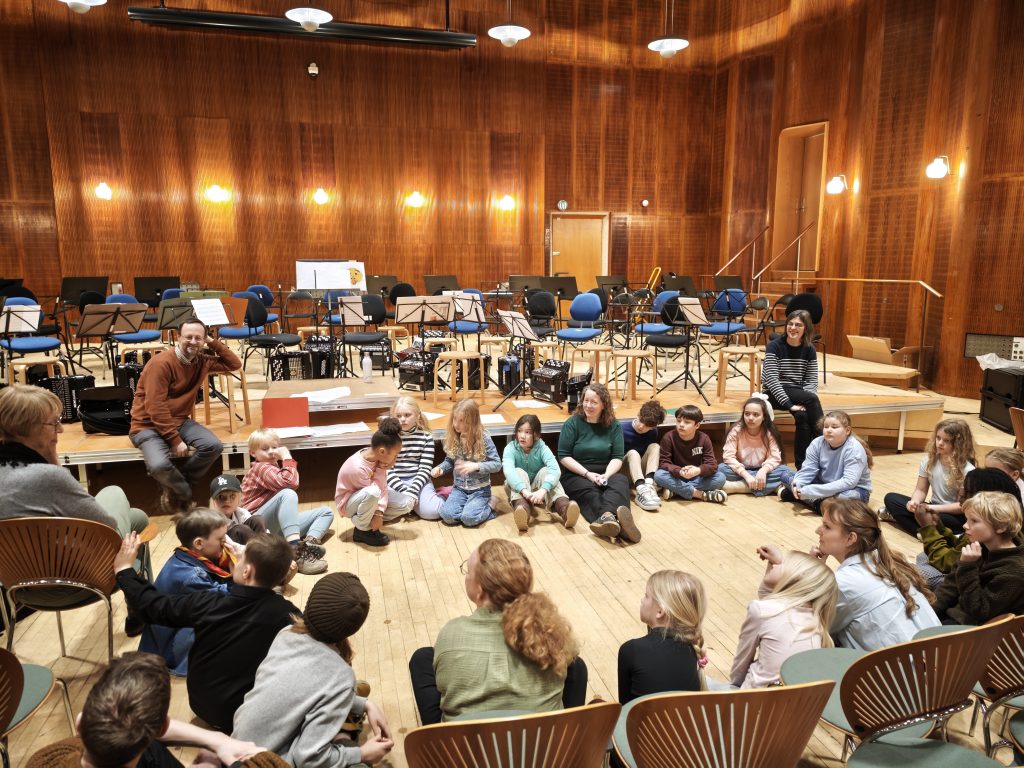
After the workshops, a children’s accordion orchestra concert followed, celebrating the virtuosity and versatility of the instrument. The programme featured performances by the children’s orchestras, followed by performances from students of the RDAM.

Saturday Afternoon Concert
Antonio Del Castillo:
Dance Macabre – Camille Saint-Saëns
Anastasia Zubova:
Barcarolla – Sergei Rachmaninoff
Polichinelle (arr. A. Zubova) – Sergei Rachmaninoff
Deny Vogrin:
Etude No. 2 in G minor – Moritz Moskovski
Sonata No. 6, 2nd movement – Anatoly Kusyakov
Educator Anna Hudephol from Faroe Islands, introduced “Akkoerdeon ABC,” a pedagogical resource designed for young accordion students. The new method encourages intuitive learning and creative exploration, utilising new and traditional Faroe Island songs allowing children and teachers to develop fundamental musical skills through playful and accessible materials.

International collaboration remained a feature of the symposium. Among the invited speakers was New Zealand accordionist Grayson Masefield, who presented on the historical development and current initiatives of the Confédération Internationale des Accordéonistes (CIA). His talk explored the importance of the Coupe Mondiale competitions, World Accordion Day, the World Accordion Museum Alliance & the video archive project in collaboration with Accordions Worldwide, as a global platform supporting young artists, teachers, and organisations dedicated to advancing the instrument.
The symposium concluded with a roundtable discussion reflecting on the themes of innovation, inclusion, and international cooperation, before the final day, Sunday 1st March which featured a masterclass by Grayson Masefield with RDAM students, open to the public and attending guests.
Through research presentations, artistic experimentation, and educational initiatives, the symposium continues to strengthen collaboration across borders while exploring the future of the accordion in both artistic and academic contexts. The 2026 edition was made possible through the generous support of the A.P. Møller and Hustru Chastine Mc-Kinney Møllers Fond til almene Formaal, whose contribution helped bring together artists, researchers, teachers, and students for a week of exchange, discovery, and inspiration.
Related stories
-
First Nordic Accordion Teachers Symposium 2024 – Denmark
-
NordAccordion 2025 Festival Concerts – Norway
event features Norwegian and international guests...
> More Stories


